Tuesday, December 24, 2013

Chocolate Chip Cookie Quest


If a guy is going to bake 1,536 cookies in a attempt to create the best chocolate chip cookie recipe, I'm giving it a try.

The recipe is here.

Stay tuned.

From Serious Eats
I'm sorry, what was that dear? 
"I said, stop making cookies." 
That's odd, I thought to myself. Why would she be saying that? Wouldn't any wife be pleased to be married to a husband who fills the house with the aroma of warm butter, caramelized sugar, and gooey chocolate? Indeed, wouldn't any human being in the right mind yearn to be constantly surrounded by sweet, crisp-and-chewy snacks? 
Then, as I glanced around the apartment, wiping chocolate-specked hands against my apron, running a finger across the countertop and tracing a line into the dusting of white powder that coated every surface in the kitchen, eyeing the dozens of bags of failed experimental cookies that blocked the television, opening the refrigerator door to discover that more than half of its contents were batches of uncooked cookie dough in various stages of rest, I thought, maybe she does have a point.

Monday, December 23, 2013

Six Drummers

We were introduced to some amazingly creative percussion by our Swedish family who are our houseguests for Christmas. Tack.

The Fed


100 years ago today an institution (and employer) was born.

From NPR


He told a handful of New York bankers to go on a given night, one by one, to a train station in New Jersey. There they would find a private rail car hitched to the back of a southbound train. To conceal their identities, Aldrich told the bankers to come dressed as duck hunters and to address each other only by first name. 
The train headed south, and the bankers got off in Georgia. They spent the next week holed up in a private club at a place called Jekyll Island. 
At Jekyll Island, Aldrich and the bankers came up with a plan. They knew many Americans thought a central bank could become too powerful, too influential in the economy. So they came up with a classic American workaround: They decided the U.S. should create lots of little central banks, scattered all around the country. 
The plan they came up with still had a long way to go. It got shot down the first time in Congress. The plan for a central bank was debated, changed significantly, renamed. But the basic idea held up. And on Dec. 23, 1913, President Woodrow Wilson signed the Federal Reserve Act into law.
Reminds me of the time many years ago when we visited my parent's friends who lived on Jeykll Island.

Little did I know...

Saturday, December 21, 2013

The Chemistry of Cookies

As you make Christmas cookies keep this video in mind.

From YouTube


I had no idea so much was going on in a cookie.

A commenter at Gizmodo nails the "real chemistry" though…
The real chemistry of baking cookies comes only when you are real young.....and its a cold chilly fall/winter day .....you just helped your mother or grandmother mix up a big batch of chocolate chip or oatmeal raisin.....you got to lick the spoon and maybe a little bit of the bowl....she opens the oven door and the kitchen is filled with a warmth that chases the cold from the room...and the fresh baked smell fills the air that teases you with the notion that the best is yet to come......
Ahhhhh, I remember that experience like it was yesterday. Enjoy the holidays!

Monday, December 9, 2013

Income Inequality

There's been a significant amount of talk recently about growing income inequality.  Both Pope Francis and President Obama have discussed this problem in the past few weeks.

This video nails the issue on it's head as far as the U.S. is concerned…

Saturday, December 7, 2013

Turnley on Mandela


I've spent the morning watching video segments about Mandela's passing.  This one, an interview with Pulitzer Prize winning photographer David Turnley who spent 28 years photographing South Africa's struggle with apartheid, stands out among them all. 


A must read and see tribute from David Turnley via Time
The door opens and in walks Nelson Mandela. He greets each person in the room, with the charm and confidence of someone who has never been gone. 
Madiba is tall and in unbelievable shape. His presence is so powerful. He gives everyone a bear hug. Smiles stretch across our faces. And Archbishop Tutu clings a glass with a spoon. Directly in front of Madiba, the crowd outside is frantic with excitement, unaware that Madiba is with us. Archbishop Tutu looks into Nelson’s eyes, and with tears streaming down his face, says, “I have to tell you what you have meant to my life….” And then each person in the room follows. Madiba stands proudly receiving each heartfelt word. It is as if you can palpably see the dignity of Nelson Mandela, of each second of 27 years, proudly and clearly contained to be ready for this moment. And then, he looks at all of us. 
“You will have to forgive me. I have something I have to take care of.” He proceeds to walk to the window, stepping out onto the balcony to address his South African people, and the world, for the first time in almost three decades. As the sun sets, the Mandela family and friends stand at the window, everyone’s fists raised in the air, tears streaming down their cheeks as the crowd greets their leader with the African National Anthem Nikosi Sikelela. He finishes his speech with the same words that he spoke at the end of the treason trial that sent him to prison for life in 1964.

“During my lifetime I have dedicated myself to this struggle of the African people. I have fought against white domination, and I have fought against black domination. I have cherished the ideal of a democratic and free society in which all persons live together in harmony and with equal opportunities. It is an ideal which I hope to live for and to achieve. But if needs be, it is an ideal for which I am prepared to die.”

Friday, December 6, 2013

Mandela


I posted this video earlier in the year but in light of yesterday's sad loss of a man who defines greatness it's worth posting again.

Nelson Mandela's first TV interview...


Rest in Peace Nelson Mandela.

Tuesday, December 3, 2013

"Axe and It Shall Be Given"


Looks like someecards and plenty of others have it wrong. Who knew.

From NPR...
The most common stereotype of black vernacular is the pronunciation of the word "ask" as "ax." "Ax" has gotten a bad rap for years. Pronounce "ask" as "ax," and immediately many will assume that you're poor, black and uneducated. New York City's first African-American schools chancellor, Dr. Richard R. Green, put it on his list of "speech demons." He insisted that "ax" be eradicated from students' vocabulary. 
Jesse Sheidlower, the president of the American Dialect Society, says "ax" has been used for a thousand years. "It is not a new thing; it is not a mistake," he says. "It is a regular feature of English." 
Sheidlower says you can trace "ax" back to the eighth century. The pronunciation derives from the Old English verb "acsian." Chaucer used "ax." It's in the first complete English translation of the Bible (the Coverdale Bible): " 'Axe and it shall be given.'

Sunday, December 1, 2013

For Sports Fans

Turn on a game and get a (tiny) workout.

From HuffPo...
Watching sport can make you fitter, according to research Sunday that said viewing other people exercise increases heart rate and other physiological measures as if you were working out yourself. 
The study, published in the international journal Frontiers in Autonomic Neuroscience, showed that when watching a first person video of someone else running, heart rate, respiration, skin blood flow and sweat release all increased.
BUT…
While the study concluded that your body will get a small workout from simply watching others exercise, Macefield cautioned that nothing compared to real physical activity. 
"While watching other people exercise may increase your heart rate and have other physiological effects, nothing can replace the health benefits of getting off the couch," he said.

Friday, November 29, 2013

Happy Black Friday

Folks have lost their minds.


It would be one thing if this behavior was an isolated incident but it's not.  There are plenty of YouTube videos and tweets about this kind of craziness today.  It's such a shame that consumerism has gotten us to this point. 

Thursday, November 28, 2013

Today's Flavor


I was struggling to come up with an ice cream that would go well with a pumpkin bread pudding that my nephew is making for Thanksgiving dessert. Finally, I came across a recipe for Brown Butter Cinnamon ice cream.

So far, so good.

The recipe can be found here.

"Where is the Love?"

Nicholas Kristof nails it for his Thanksgiving Day column.

From the NYT
As we celebrate Thanksgiving, let’s remember that the difference between being surrounded by a loving family or being homeless on the street is determined not just by our own level of virtue or self-discipline, but also by an inextricable mix of luck, biography, brain chemistry and genetics. 
For those who are well-off, it may be easier to castigate the irresponsibility of the poor than to recognize that success in life is a reflection not only of enterprise and willpower, but also of random chance and early upbringing. 
Low-income Americans, who actually encounter the needy in daily life, understand this complexity and respond with empathy. Researchers say that’s why the poorest 20 percent of Americans donate more to charity, as a fraction of their incomes, than the richest 20 percent. Meet those who need help, especially children, and you become less judgmental and more compassionate. 
And compassion isn’t a sign of weakness, but a mark of civilization.

Happy Thanksgiving everyone. May we all learn to be a bit more compassionate.

Monday, November 25, 2013

Dude

The interesting history of the word "dude".

From the Chronicle of Higher Education (of all places)…
Popik, Cohen, Sam Clements, and a few other collaborators were googlers before there was Google. They actually searched pertinent back issues of 19th-century periodicals for evidence of the origin and spread of “dude.” 
The results appear in the October-November double issue of Comments, some 129 pages devoted entirely to the early days of “dude.”  
Thanks to Popik and Cohen’s thorough investigation, it seems almost certain that “dude” derived from “doodle,” as in “Yankee Doodle Dandy.” The original New England Yankee Doodle, Cohen notes, “was the country bumpkin who stuck a feather in his cap and called it macaroni; i.e., by sticking a feather in his cap, he imagined himself to be fashionable like the young men of his day known as ‘macaronis.’” 
For some reason, early in 1883, this inspired someone to call foppish young men of New York City “doods,” with the alternate spelling “dudes” soon becoming the norm. Exactly what these fashionable fools were like unfolds copiously in the pages of Comments. 
From the New-York Mirror of February 24, 1883: “. . . a new and valuable addition has been made to the slang vocabulary. … We refer to the term “Dood.” For a correct definition of the expression the anxious inquirer has only to turn to the tight-trousered, brief-coated, eye-glassed, fancy-vested, sharp-toes shod, vapid youth who abounds in the Metropolis at present. …

Sunday, November 24, 2013

At the Movies

If you've seen Gravity (it's entertaining and a likely candidate for Best Special Effects but definitely not Best Picture) take a look at this related short.

From Wired…


On a recent flight I watch After Earth.  It's a typical Hollywood action flick, predictable and good for a flight but don't waste your time seeing it in the theater.  However, there was one quote from Will Smith's character in the movie that stuck with me:
“Fear is not real. It is a product of thoughts you create. 
Do not misunderstand me. Danger is very real. 
But fear is a choice.”

Makes sense and the quote would make just as much sense if "fear" was replaced by anxiety, nervousness, or stress. They're all a choice.

Update: Add anger to that list as well.

Saturday, November 23, 2013

"Why I Make Terrible Decisions, or, Poverty Thoughts"

A remarkable must-read essay from a woman who describes herself "as living on the edges." The back and forth between the author and commenters provides more thought provoking insights into poverty, class, judgement, and entitlement in the U.S.

From Killer Martinis...
There’s no way to structure this coherently. They are random observations that might help explain the mental processes. But often, I think that we look at the academic problems of poverty and have no idea of the why. We know the what and the how, and we can see systemic problems, but it’s rare to have a poor person actually explain it on their own behalf. So this is me doing that, sort of. 
Rest is a luxury for the rich. I get up at 6AM, go to school (I have a full courseload, but I only have to go to two in-person classes) then work, then I get the kids, then I pick up my husband, then I have half an hour to change and go to Job 2. I get home from that at around 1230AM, then I have the rest of my classes and work to tend to. I’m in bed by 3. This isn’t every day, I have two days off a week from each of my obligations. I use that time to clean the house and soothe Mr. Martini and see the kids for longer than an hour and catch up on schoolwork. Those nights I’m in bed by midnight, but if I go to bed too early I won’t be able to stay up the other nights because I’ll fuck my pattern up, and I drive an hour home from Job 2 so I can’t afford to be sleepy. I never get a day off from work unless I am fairly sick. It doesn’t leave you much room to think about what you are doing, only to attend to the next thing and the next. Planning isn’t in the mix... 
...I smoke. It's expensive. It's also the best option. You see, I am always, always exhausted. It's a stimulant. When I am too tired to walk one more step, I can smoke and go for another hour. When I am enraged and beaten down and incapable of accomplishing one more thing, I can smoke and I feel a little better, just for a minute. It is the only relaxation I am allowed. It is not a good decision, but it is the only one that I have access to. It is the only thing I have found that keeps me from collapsing or exploding… 
...Poverty is bleak and cuts off your long-term brain. It’s why you see people with four different babydaddies instead of one. You grab a bit of connection wherever you can to survive. You have no idea how strong the pull to feel worthwhile is. It’s more basic than food. You go to these people who make you feel lovely for an hour that one time, and that’s all you get. You’re probably not compatible with them for anything long-term, but right this minute they can make you feel powerful and valuable. It does not matter what will happen in a month. Whatever happens in a month is probably going to be just about as indifferent as whatever happened today or last week. None of it matters. We don’t plan long-term because if we do we’ll just get our hearts broken. It’s best not to hope. You just take what you can get as you spot it.

The author recently started her own blog. It's definitely going in my bookmarks.

Friday, November 22, 2013

12 Years a Slave 160 Years Later

After we watched the superb film 12 Years a Slave yesterday evening (if you haven't seen it…GO!), I spent this morning delving deeper into Solomon Northup's life as well as a variety of other aspects of the movie.

Here's what I've learned:

Descendants of Solomon Northup

From Nola.com
McQueen was just finishing up a post-screening Q-and-A with "12 Years a Slave" actors Chiwetel Ejifor and Lupita Nyong'o when he was informed a special guest was in the audience.  Her name: Evelyn Jackson and, McQueen was told, she is a descendant of Northup, the man on whose memoirs McQueen's film is based.
I said, 'We've got an important announcement, please. This lady here is a direct descendant of Solomon Northup. "The crowd erupted. It was a standing ovation. Tears -- she was in tears. She goes, 'I need a hug!' So we embraced. It was just one of those -- I have goose pimples talking about it now. It was just one of those things where the film and the actual reality came together. So it was just -- yeah, it was magic."
Evelyn Jackson and Steve McQueen
From Saratoga Springs Visitor Center...
In 1999, in recognition of his life’s work, his ordeal and that of other African-Americans, native Saratogian, Renee Moore, founded “Solomon Northup Day – A Celebration of Freedom”. 
An historical marker was placed by the City of Saratoga Springs on Broadway at the side entrance of the Visitor Center marking the point of abduction.
Northup descendants from four states have attended the event over the years including, matriarch Victoria Northup Linzy Dunham who lived to age 98. 
Descendants of Solomon Northup in 1999
In 2002, the Saratoga Springs City Council proclaimed the third Saturday in July to be annually recognized as “Solomon Northup Day” and the “Celebration of Freedom” event is held at the Heritage Area Visitor Center every July.

Historical Locations in and near Washington, DC

Just as in the movie, the slave pen in which Northup was held was within sight of the U.S. Capitol. It was located on the site of what is now the FAA headquarters at 600 Independence Ave NW (across the street from the Air and Space Museum).

A slave market from which Northup was likely sold still stands in Old Town Alexandria at 1315 Duke St. It is now a museum and the headquarters of the Northern Virginia Urban League.

The Williams slave pen in Washington, DC was located here
From WUSA CBS...


Adherence to the Novel

As with most films adapted from a novel, there are several things that stray a bit from the book. Nonetheless, overall the film adhered fairly close to the narrative that Solomon Northup wrote.  An article from Slate touches upon several of the deviations.

A poignant scene from the film as originally written by Solomon Northup via Louisiana Tech...
"Good-bye, master." 
"Ah! you d——d nigger," muttered Epps, in a surly, malicious tone of voice, "you needn't feel so cussed tickled — you ain't gone yet — I'll see about this business at Marksville to-morrow." 
I was only a "nigger" and knew my place, but felt as strongly as if I had been a white man, that it would have been an inward comfort, had I dared to have given him a parting kick. 
On my way back toward the carriage, Patsey ran from behind a cabin and threw her arms about my neck. 
"Oh! Platt," she cried, tears streaming down her face, "you're goin' to be free — you're goin' way off yonder where we'll neber see ye any more. You've saved me a good many whipping, Platt; I'm glad you're goin' to be free — but oh! de Lord, de Lord! what'll become of me?" 
I disengaged myself from her, and entered the carriage. The driver cracked his whip and away we rolled. I looked back and saw Patsey, with drooping head, half reclining on the ground; Mrs. Epps was on the piazza; Uncle Abram, and Bob, and Wiley, and Aunt Phebe stood by the gate, gazing after me. I waved my hand, but the carriage turned a bend of the bayou, hiding them from my eyes forever.
The entire text of 12 Years a Slave is available via Louisiana Tech


The Real Samuel Bass

From The Spec
Morris and other descendants say they are only now discovering details about Bass, who left Canada sometime around 1840 and took on a series of carpentry jobs throughout the United States. 
It turns out that other aspects of his life were not so honourable — census records show he left behind a wife, Catherine Lydia Lane, and four daughters: Catherine, Hannah, Martha Maria and Zeruah Bass, says Bonnie Gaylord of the Grenville County Historical Society in Prescott, Ont. 
...John Pamplin Wadill's diary also offers clues to why Bass left his family. 
"He had been separated from his wife for 12 or 15 years," Wadill states in an entry dated Aug. 30, 1953, which also lists Bass's wife's name as Lydia Catlin Lane. "His only complaint against her was that she had such a temper as to preclude any man from living with her." 
The diary also raises the possibility that Bass may have had a second family in Louisiana, says Fiske. The diary notes Bass died of pneumonia at the home of a free woman of colour in Marksville, La., named Justine Tounier. It says Bass passed away Aug. 30, 1853, just months after Northup regained his freedom. 
"I suspect that there was a relationship (with Tounier) but the diary doesn't say," says Fiske, adding he also discovered the death record of a woman who appears to list Bass and Tounier as parents.

The Epps Plantation

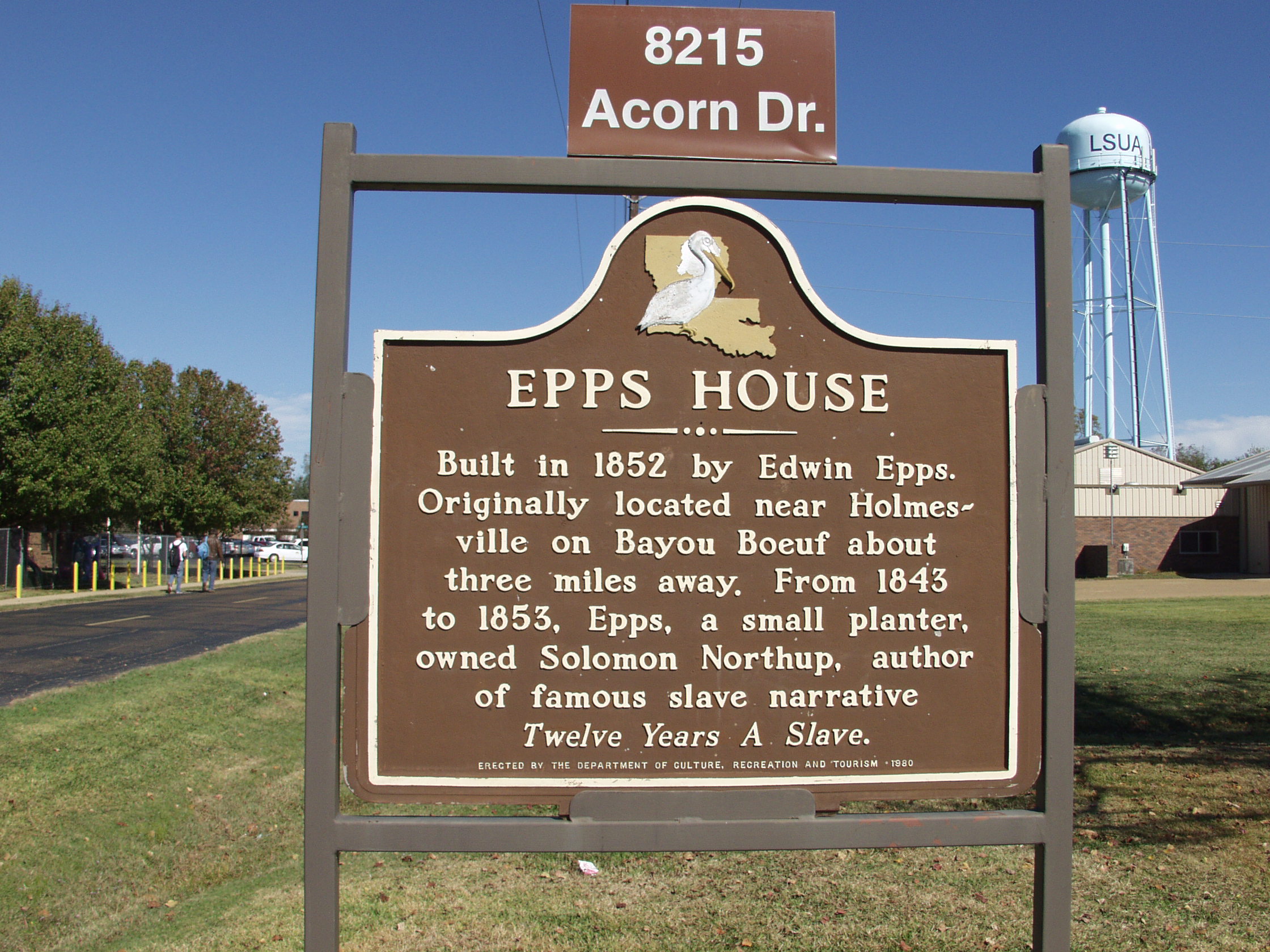
Edwin Epps was Northup's fourth and final slave owner. Northup was a slave on Epps' plantation for ten years and remembers him as having a "sharp, inquisitive expression" and "manners [that were] repulsive and coarse." In 1845 Epps purchased the roughly 300 acre plantation. 1850 U.S. Federal Census Slave Schedules show he owned 8 slaves between the ages of 40 and 11, six males, one of whom was Northup, and two females. In 1852 Solomon began work on the house on this property. During this construction he met Samuel Bass, a Canadian carpenter.  
The Edwin Epps House was originally located along the banks of Bayou Boeuf on Carl Hunt Road off of Highway 1176 outside of Bunkie.
The Epps Plantation was located here

Epps House in 1976 before it was moved
It was moved into Bunkie in 1976 for the purpose of becoming a museum, however, it was later purchased by LSU-Alexandria and is currently on the campus operating as a museum.  

Epps house after it was moved to the campus of LSU-Alexandria and refurbished
Epps Plantation as it looks now
From Civil War Album...
We were told the [Epps] home escaped being torched, like the rest, by Union troops because some of the New York soldiers had read the book Twelve Years A Slave by Solomon Northup who was a slave of the Epp's Family. The house is now located near the site of the Chambers Plantation which was destroyed by Union troops and fought over in May 1864.

An Earlier Gordon Parks Adaptation

In 1984, Gordan Parks made a movie for PBS based on 12 Years a Slave.

From Nola.com
Gordon Parks' 1984 adaptation of Northup's memoirs, "Solomon Northup's Odyssey," -- which aired on PBS as part of its American Playhouse series -- starred Avery Brooks in the title role, as a free man of color living in New York state who was kidnapped and sold into slavery in 1841. 


History is Silent

From the WSJ
The available evidence suggests that after his freedom, Northup’s life was anything but quiet and contemplative. Indeed, his final years are a bona fide mystery, even today, with a string of tantalizing clues. 
His last public sighting mentioned in a newspaper was in 1857, only four years after his freedom. 
Empathetic to the plight of slaves, documents show Northup almost certainly joined the Underground Railroad after his freedom— an illegal and extremely dangerous line of work, something that would sate his notable desire for adventure. He became a prolific speaker, joining Frederick Douglass and other major abolitionists in addressing Northeast audiences eager to hear his story first-hand. He also became a property owner in Glens Falls, N.Y. 
But despite all the newfound fame and purpose he found, money woes plagued him. In 1854, lenders foreclosed on his property. Other creditors won judgments against him over failure to repay loans he incurred, possibly to finance his speaking trips or assist slaves. A play he wrote (and starred in) based on the book had been a flop. 
Many believed his two kidnappers, driven by revenge for their trial, murdered Northup, but that fate is dismissed by the historians as “not credible.” Another possibility that he was kidnapped a second time is also noted, but dismissed. 
There are a few convincing theories on Northup’s final years. One is that Northup “died destitute, far from family and friends, perhaps under tragic circumstances,” the historians write. There is evidence he could have even “given up, resorted to drink, or sunk below the surface.” Or he may have gone to live with his daughter in Virginia. Clues are scarce. 
For all their research, Solomon Northup’s final days are a mystery still. 

In Memory


Where was I when President Kennedy was assassinated?

In utero. Fifty years ago today, I had not been born. Close but not yet.

On that infamous day the nation lost a President and today we remember his death. Forty-eight years later on another tragic day in U.S. history, we almost lost 40,000 frozen moments of President Kennedy's life.

From Big Think...
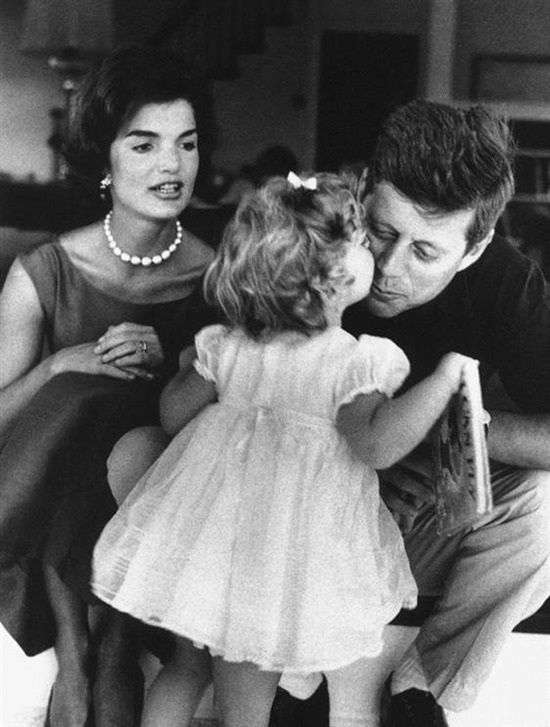
This week we mark the loss half a century ago of President John F. Kennedy. For that generation, Kennedy’s death was the “where were you” moment. For our generation, the “where were you” moment is September 11th. In the middle of all that devastation, few knew that we “lost” JFK in that moment, too. Locked away in a safe in Five World Trade Center were 40,000 negatives of photos of the Kennedy circle by photographer and family insider Jacques Lowe. The trusted photographer of the Kennedys since the late 1950s, Lowe captured many of the iconic pictures of JFK and Camelot in the making…

...When Lowe’s daughter, Thomasina, to whom Jacques entrusted the negatives, learned of the attacks on September 11th, she faced a unique dilemma: “Do I save myself or my father’s precious negatives, depicting one of the greatest statesmen of the modern era…?” “In my mind’s eye,” Thomasina writes in the preface to the book, “I could see my father running down Broadway against the flow of traffic with just one aim: to rescue his negatives. I have no doubt that he would not have paused for thought.”

Thursday, November 21, 2013

Mars Flyover


A stunning view of our galactic next door neighbor. 

The ‘flyover’ comes courtesy of Mars Express which was launched by the European Space Agency on 2 June 2003 and arrived at Mars six and a half months later. The spacecraft has orbited the Red Planet nearly 12,500 times since its arrival and has beamed back data and images collected by the scientific instruments aboard. 
This data was collated to create a nearly global digital topographic model of Mars’ surface, making the viewing of the ‘flyover’ a three dimensional experience. The flyover explores the grabens, valleys, canyons, mountains and lava flows in unprecedented detail. 

Wednesday, November 20, 2013

Immense Art


It looks so simple but undoubtedly it's quite complex.

From This is Colossal...
Unveiled [last month] in Belfast, Northern Ireland as part of the Belfast Festival, WISH is the latest public art project by Cuban-American artist Jorge Rodriguez-Gerada, known for his monumentally scaled portraits in public spaces. The image depicted is of an anonymous Belfast girl and is so large it can only be viewed from the highest points in Belfast or an airplane. 
Several years in the making, WISH was first plotted on a grid using GPS technology and 30,000 manually placed wooden stakes. The portrait was then “drawn” with aid of volunteers who helped place nearly 8 million pounds of natural materials including soil, sand, and rock over a period of four weeks.

Tuesday, November 19, 2013

Four Score and Seven Years Ago...


Immense quality can be found in brevity. Current politicians could do themselves a favor by learning this lesson.

From Abraham Lincoln Online...
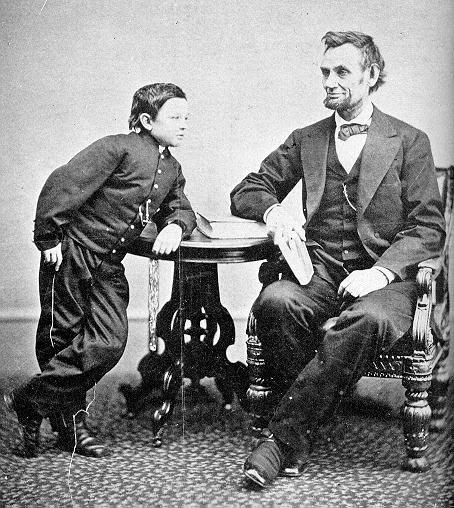
There are five known copies of the speech in Lincoln's handwriting, each with a slightly different text, and named for the people who first received them: Nicolay, Hay, Everett, Bancroft and Bliss. Two copies apparently were written before delivering the speech; the remaining ones were produced months later for soldier benefit events. Despite widely-circulated stories to the contrary, the president did not dash off a copy aboard a train to Gettysburg. Lincoln carefully prepared his major speeches in advance; his steady, even script in every manuscript is consistent with a firm writing surface, not the notoriously bumpy Civil War-era trains. Additional versions of the speech appeared in newspapers of the era, feeding modern-day confusion about the authoritative text.
"Four score and seven years ago our fathers brought forth on this continent, a new nation, conceived in Liberty, and dedicated to the proposition that all men are created equal.

Now we are engaged in a great civil war, testing whether that nation, or any nation so conceived and so dedicated, can long endure. We are met on a great battle-field of that war. We have come to dedicate a portion of that field, as a final resting place for those who here gave their lives that that nation might live. It is altogether fitting and proper that we should do this.

But, in a larger sense, we can not dedicate -- we can not consecrate -- we can not hallow -- this ground. 
The brave men, living and dead, who struggled here, have consecrated it, far above our poor power to add or detract. The world will little note, nor long remember what we say here, but it can never forget what they did here. It is for us the living, rather, to be dedicated here to the unfinished work which they who fought here have thus far so nobly advanced. It is rather for us to be here dedicated to the great task remaining before us -- that from these honored dead we take increased devotion to that cause for which they gave the last full measure of devotion -- that we here highly resolve that these dead shall not have died in vain -- that this nation, under God, shall have a new birth of freedom -- and that government of the people, by the people, for the people, shall not perish from the earth."

Abraham LincolnNovember 19, 1863

LinkWithin

Related Posts